The arrival of the monsoon season is a welcome change for residents of Dhakoli, Zirakpur, Panchkula, and Chandigarh. After months of intense summer heat, cooler temperatures and refreshing rainfall bring much-needed relief. However, while the rainy season creates pleasant weather, it can also create serious problems for homeowners if their property is not prepared in advance.
Every year, many apartment owners face issues such as water seepage, wall dampness, mold growth, blocked drains, and electrical problems. What starts as a small crack in a balcony tile or a clogged drain can quickly turn into expensive repairs once heavy rainfall begins.
The good news is that most monsoon-related property issues can be prevented with a little preparation before the rains arrive. Taking a few simple steps now can help you avoid stress, save money, and keep your home comfortable throughout the season.
Here is the ultimate monsoon property preparation checklist for homeowners and apartment residents in Dhakoli.
1. Inspect Your Roof and Balcony Areas
Your roof and balcony are the first areas exposed to heavy rainfall. Even a tiny crack can allow water to seep inside, causing damage to ceilings, walls, and paint.
What You Should Check:
- Remove leaves, dirt, and debris from balconies and terraces.
- Look for cracks in tiles, corners, and grout lines.
- Check for loose or broken tiles.
- Inspect ceiling corners for old damp patches.
- Ensure water drains properly from the balcony.
Why It Matters
Water often enters through small cracks that go unnoticed during dry weather. Once the monsoon starts, these cracks allow water to penetrate the structure, leading to leakage and expensive waterproofing work.
Pro Tip
If you notice peeling paint, water stains, or signs of previous leakage, consider applying a waterproof coating before the rainy season begins.
2. Check Windows and Doors for Water Leakage
Strong monsoon winds can force rainwater through tiny gaps around windows and doors. Many homeowners only discover these leaks after water starts appearing on interior walls.
Things to Inspect:
- Silicone sealant around window frames.
- Rubber beading on sliding windows.
- Gaps between walls and window frames.
- Door thresholds and balcony doors.
Warning Signs
- Damp wall patches near windows.
- Water droplets on interior walls.
- Peeling paint around frames.
- White powder deposits (commonly known as “shora”).
Solution
Replace damaged sealants and fill any visible gaps before the rainy season. A small repair now can prevent major water damage later.
3. Clean Balcony and Utility Area Drains
Blocked drains are one of the most common causes of apartment flooding during monsoon months.
Balconies, utility areas, and service ducts often collect dust, leaves, hair, and other debris throughout the year. During heavy rain, these blockages prevent water from flowing away properly.
Simple Drain Test
Pour a bucket of water into the drain.
If water:
- Flows away immediately – the drain is working properly.
- Drains slowly – partial blockage exists.
- Stays pooled – immediate cleaning is needed.
Cleaning Tips
- Remove the drain cover or jali.
- Clear accumulated debris.
- Flush with water.
- Use baking soda and vinegar for mild blockages.
- Consider professional drain cleaning for stubborn clogs.
4. Protect Your Home from Dampness and Mold
Humidity levels rise significantly during the monsoon. This creates the perfect environment for mold and mildew growth.
Mold not only damages furniture and walls but can also cause allergies, breathing issues, and unpleasant odors.
How to Prevent Mold Growth
Keep Furniture Away from Walls
Leave at least 4–6 inches of space between wardrobes, beds, and exterior walls.
Improve Air Circulation
Open windows whenever the weather is dry.
Use Moisture Absorbers
Place:
- Silica gel packets
- Activated charcoal bags
- Moisture absorber containers
inside wardrobes, cupboards, and storage areas.
Check Hidden Areas
Pay special attention to:
- Behind wardrobes
- Under beds
- Kitchen cabinets
- Bathroom corners
These locations often develop mold before visible signs appear elsewhere.
5. Inspect Exterior Walls
Many apartment owners focus only on interior maintenance, but exterior walls play an equally important role in protecting your home.
Cracks in outside walls allow rainwater to penetrate deep into the building structure.
Look For:
- Peeling exterior paint
- Cracks in plaster
- Water stains
- Missing wall coating
- Damaged waterproofing layers
Why Early Inspection Helps
Fixing small cracks before monsoon costs significantly less than repairing interior seepage after months of water penetration.
6. Check Electrical Safety Measures
Water and electricity can be a dangerous combination.
Monsoon moisture often causes:
- Short circuits
- Tripping breakers
- Voltage fluctuations
- Damaged electrical appliances
Electrical Safety Checklist
✔ Inspect outdoor wiring
✔ Check AC outdoor unit connections
✔ Replace loose switches
✔ Cover exposed electrical points
✔ Ensure proper earthing
✔ Test inverter and backup systems
Important Tip
If you notice sparks, buzzing sounds, or moisture near electrical fittings, contact a qualified electrician immediately.
7. Service Your Air Conditioner
Many people assume AC maintenance is only necessary before summer.
However, AC units also face challenges during monsoon months.
Check:
- Drain pipes
- Outdoor units
- Filters
- Electrical connections
A blocked AC drain pipe can lead to water leakage inside your apartment.
8. Prepare Emergency Supplies
Heavy rainfall occasionally causes power outages and service disruptions.
Keeping a few essentials ready can make life easier.
Recommended Items
- Emergency flashlight
- Extra batteries
- Power bank
- First-aid kit
- Drinking water
- Basic medicines
- Emergency contact numbers
Being prepared helps avoid unnecessary inconvenience during severe weather conditions.
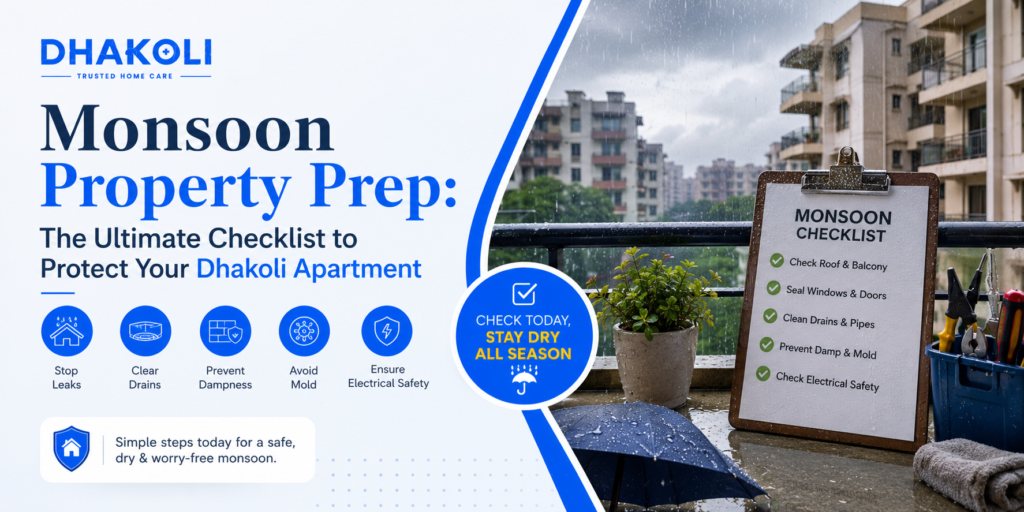
Quick Monsoon Checklist for Dhakoli Homeowners
Before the rainy season starts, make sure you have:
✅ Cleaned balcony and utility drains
✅ Checked roof and terrace waterproofing
✅ Inspected window sealants
✅ Repaired cracks in walls and tiles
✅ Moved furniture slightly away from walls
✅ Installed moisture absorbers
✅ Checked electrical wiring and switches
✅ Serviced AC drainage systems
✅ Prepared emergency supplies
Why Regular Property Maintenance Matters
Many homeowners ignore minor issues until they become major problems. Unfortunately, monsoon season can quickly turn a small crack or blockage into costly structural damage.
Routine inspections help you:
- Prevent water seepage
- Reduce repair expenses
- Improve indoor air quality
- Protect furniture and electronics
- Increase property lifespan
- Maintain property value
A few hours of preparation today can save thousands of rupees in repairs later.
Need Professional Help? Dhakoli.com Can Help
Preparing your apartment for the monsoon isn’t always easy. Climbing ladders, checking drains, inspecting roofs, or identifying hidden seepage issues often requires professional expertise.
If you notice water leakage, damp walls, blocked drainage pipes, mold growth, or any signs of Dhakoli property damage, it’s best to get expert assistance before the heavy rains arrive.
At Dhakoli.com, we help connect residents with trusted local home maintenance professionals, plumbers, waterproofing experts, electricians, and property care specialists in Dhakoli, Zirakpur, Panchkula, and nearby areas.
Don’t wait for the first heavy downpour to discover a problem. Schedule a property inspection today and enjoy a safer, drier, and stress-free monsoon season.
FAQs
1. When should I prepare my apartment for the monsoon?
Ideally, complete all inspections and repairs before the rainy season begins, usually between May and June.
2. What causes wall seepage during monsoon?
Wall seepage is commonly caused by cracks in exterior walls, damaged waterproofing, or leaking window seals.
3. How can I prevent mold growth in my apartment?
Improve ventilation, use moisture absorbers, keep furniture away from walls, and address damp areas immediately.
4. Why do balcony drains get blocked?
Dust, leaves, hair, construction debris, and dirt often accumulate in drains over time, restricting water flow.
5. Is waterproofing necessary every year?
Not always. However, annual inspections help identify damage and determine whether touch-ups or repairs are needed.
6. Can monsoon moisture damage electrical systems?
Yes. Moisture can cause short circuits, electrical faults, and damage to appliances if wiring is not properly protected.
7. How do I know if my apartment has hidden water leakage?
Signs include damp patches, peeling paint, musty odors, mold growth, wall discoloration, and white powder deposits on walls.